


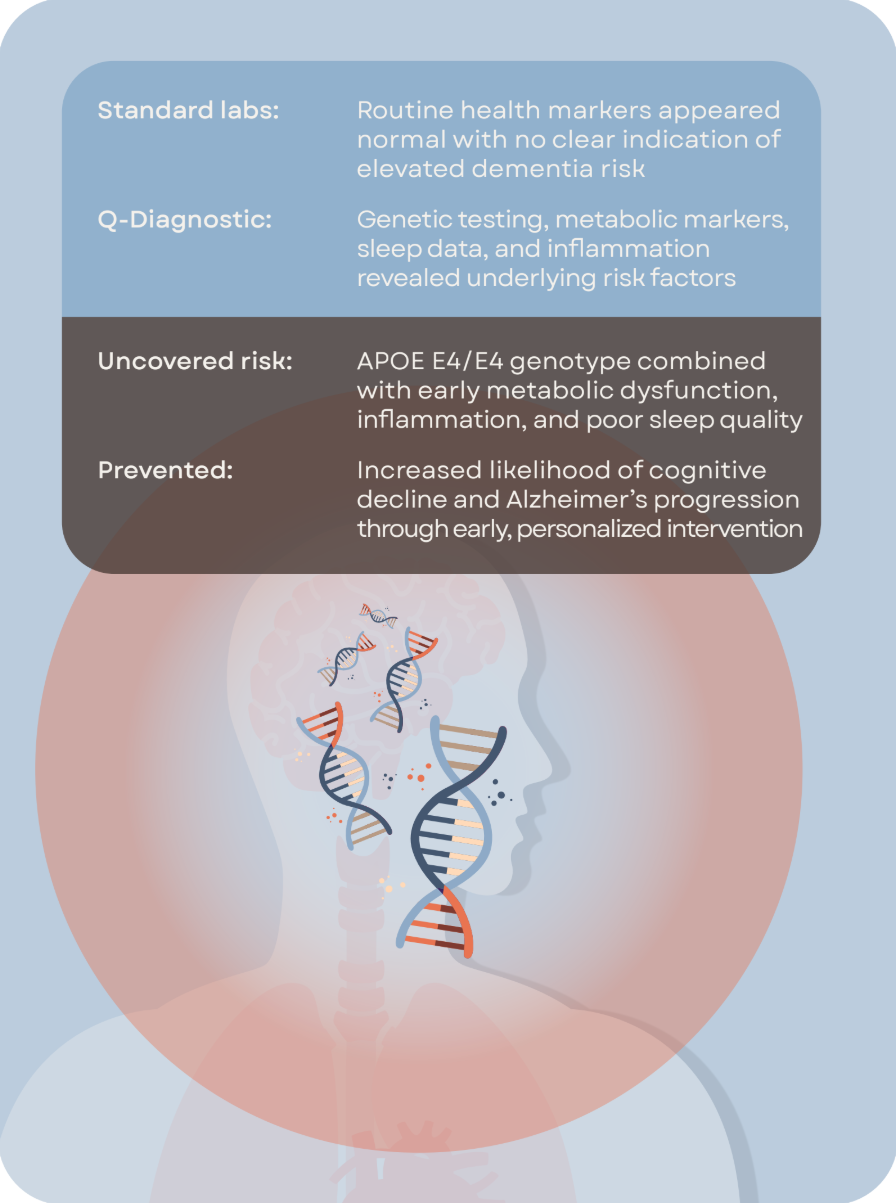

At 51, he had seen what dementia could do to a family. His father, aunt, and grandfather had all been affected, and he carried a growing concern that the same future might be ahead of him.
He was otherwise healthy. He stayed active, managed a demanding career, and felt like he was doing the right things. But given his family history, he wanted a clearer understanding of his personal risk and what he could actually control.
During his Q-Diagnostic Day, we went beyond standard labs and ran advanced genetic and metabolic testing to better understand his long term brain health risk.
His results revealed that he carried the APOE E4/E4 genotype, the highest risk genetic profile for late onset Alzheimer’s disease. While this does not make dementia inevitable, it significantly increases lifetime risk and makes lifestyle factors even more important. Additional testing uncovered early signals that would not have been caught in a routine exam. His fasting insulin suggested early insulin resistance, his Omega 3 levels were below optimal, his sleep data showed limited deep sleep, and inflammatory markers were elevated. Individually, these were subtle findings. Together, they represented meaningful risk.
Research shows that metabolic health, cardiovascular fitness, sleep quality, and inflammation are among the most powerful drivers of brain health, especially for individuals with elevated genetic risk.
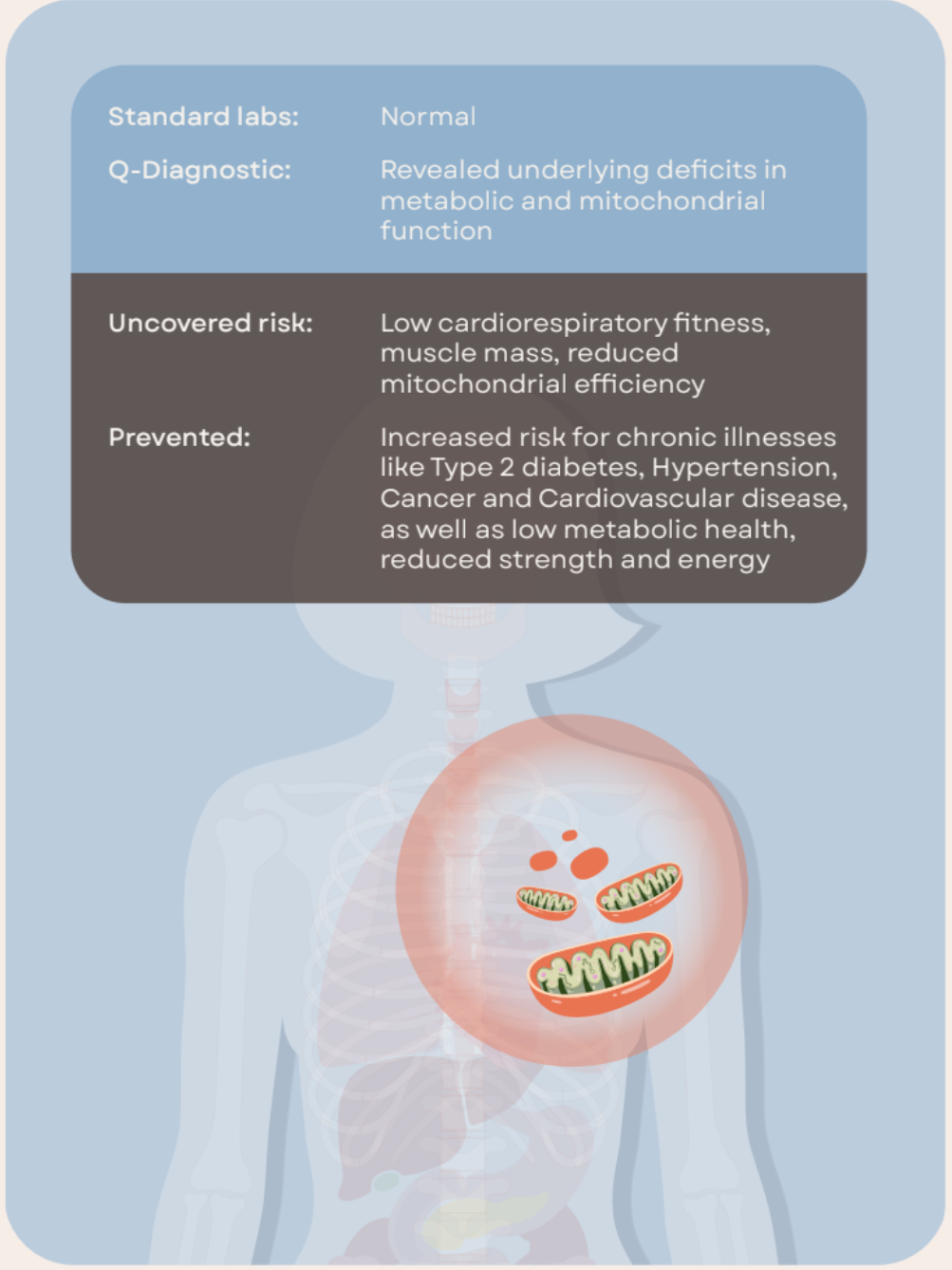
At 45, she had always considered herself healthy. Her annual physicals were “normal,” she stayed reasonably active by walking a few miles each day, and she balanced a demanding career with family life.
But something felt off. Her energy dipped in the afternoons, workouts felt harder than they used to, and her stamina was quietly declining. Like many high performing women, she assumed it was simply part of aging.
During her Q-Diagnostic Day, we went beyond traditional labs and measured how her body was actually performing. Advanced testing revealed a low VO2 max, low lean muscle mass on DEXA, reduced grip strength, and movement inefficiencies on Functional Movement Screening.
Despite reassuring lab results, her physiology told a different story. At a cellular level, her mitochondria, the powerhouse of the cell, were not producing energy as efficiently, directly impacting her metabolic health and endurance.
Research shows that objectively measured physical activity is one of the strongest predictors of all causes of mortality, and cardiorespiratory fitness, or VO2 max, is among the most powerful predictors of long term health and lifespan.
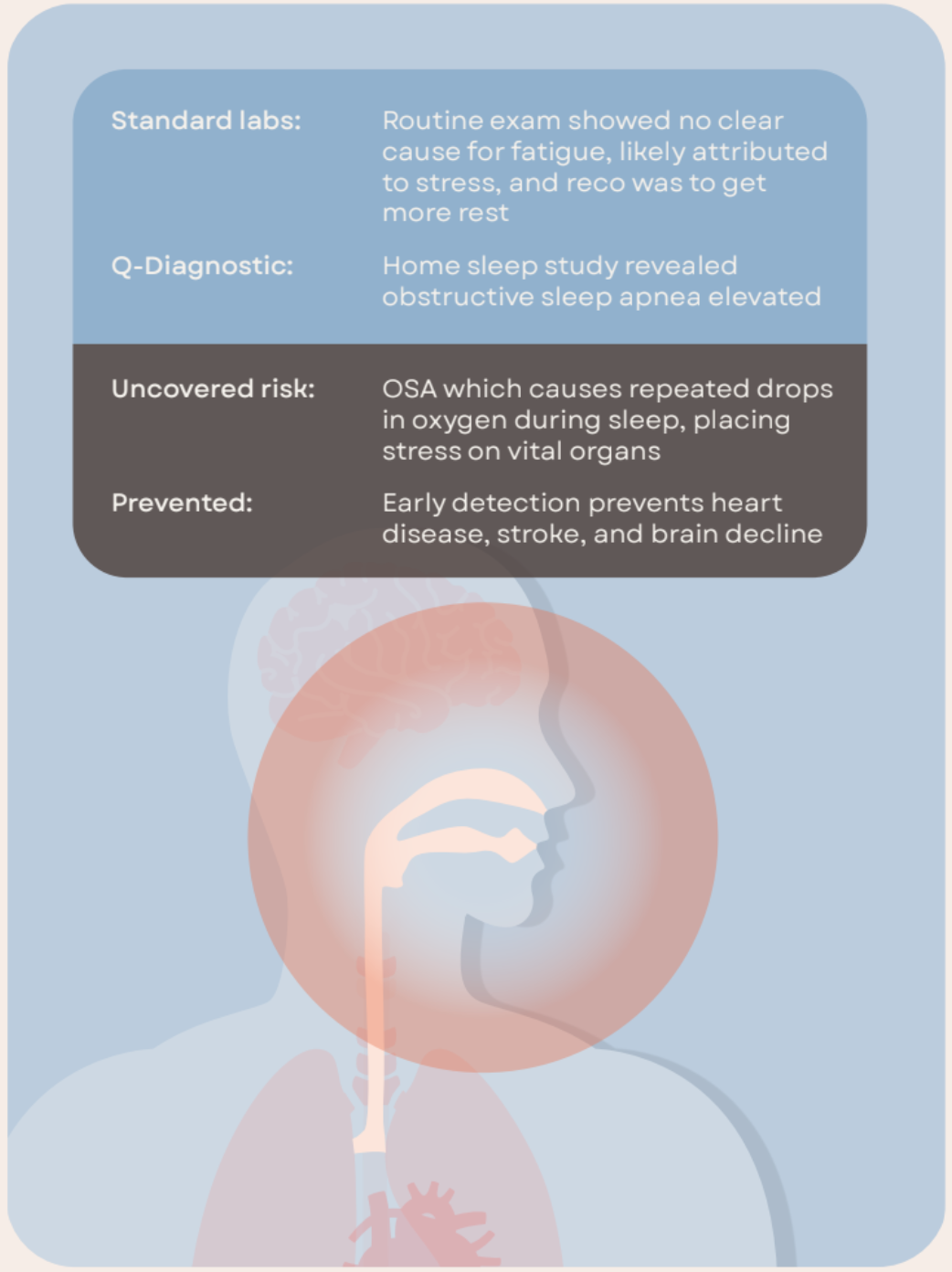
At 54, during his Q-Diagnostic Day assessment, a member shared that he was feeling exhausted, moody, and not like himself, with increasing anxiety and low mood.
He said his sleep did not feel restorative. He was waking up several times during the night and started each morning feeling tired. By mid-afternoon, he felt completely drained and agitated. To keep up with his fast-paced life, and his demanding work schedule, he relied on coffee and energy drinks to keep him going.
A previous doctor said that he probably needed to get a little more exercise and cut back on caffeine.
During his Q-Diagnostic Day, we asked several questions, ran advanced testing, and uncovered symptoms that revealed obstructive sleep apnea, a condition where breathing repeatedly stops and restarts during sleep. These pauses break up healthy sleep and can lower oxygen levels during the night, making it harder for the body and brain to fully recharge.
This explained his exhaustion, low mood, difficulty concentrating, and decline in daily performance.
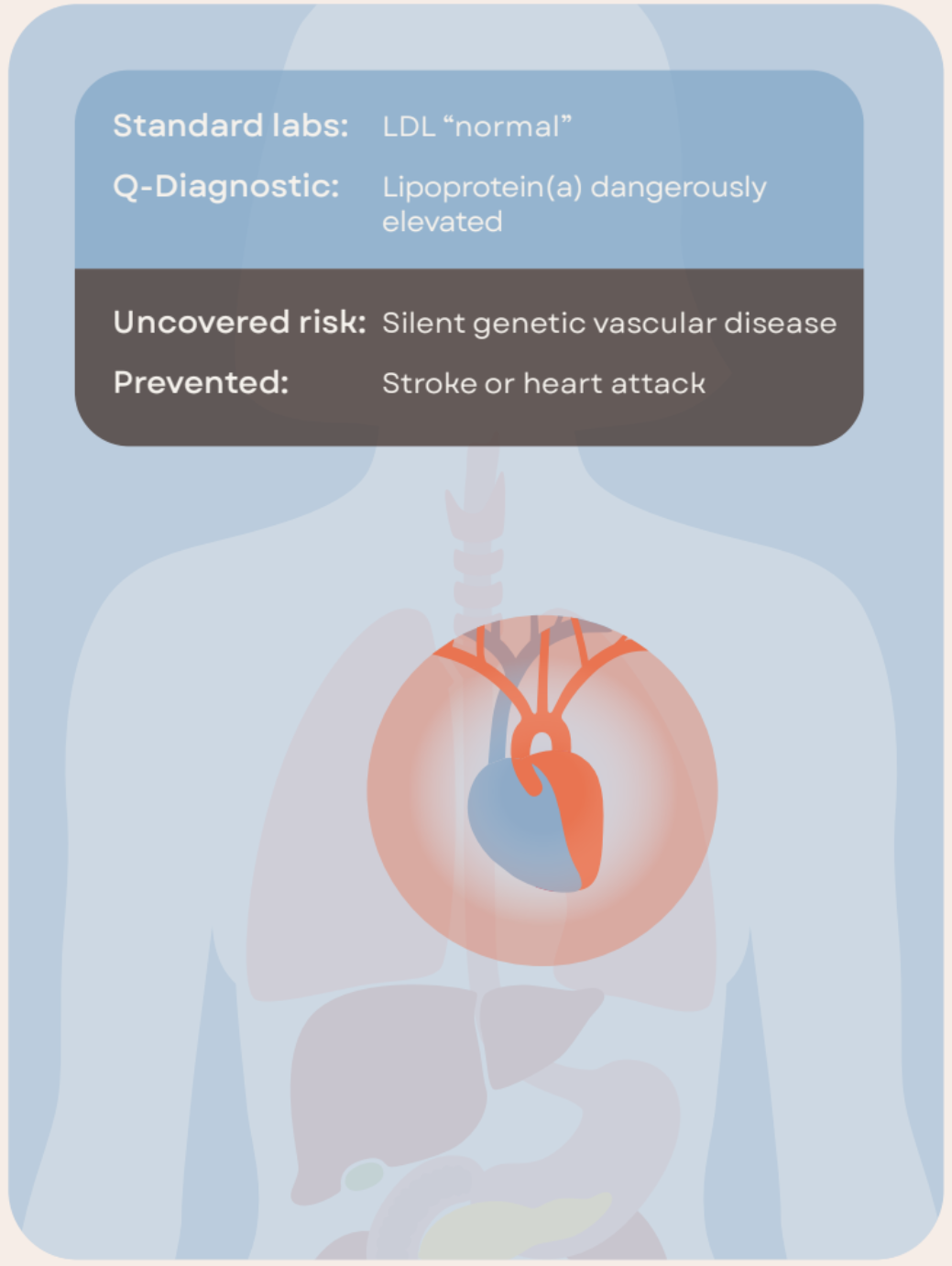
At 46, she worked out regularly. Her cholesterol was “normal.” Her annual physical raised no concerns. Standard testing said she was fine. Advanced testing said otherwise.
Her genetics revealed a high- risk vascular variant. Her lipoprotein profile showed a dangerous particle subtype that dramatically increases the likelihood of stroke and heart attack, a subtype traditional primary care panels do not measure.
No symptoms.
No warning signs.
No indication anything was wrong.


